You are in a battle. The enemy is striking you relentlessly, recklessly. But you are strategic – waiting for the right moment.
All of a sudden you unleash a secret weapon. The enemy is now badly wounded. You have made their attack weaker in a blink of an eye.
Chess is a battlefield, and a discovered attack is your secret weapon. It can give you a lead in the game, weakens the opponent’s attacks, wins tempo, and sometimes wins material. A discovered attack is deadly. Even the highest-rated players stay alert to avoid such attacks.
A discovered attack occurs when a piece moves unleashing a surprise attack with the piece behind it. This is a key tactic in the middlegame.
You can reveal a double attack, a discovered check, a discovered skewer, or even a discovered checkmate. It’s a hidden threat on the board.
I will elaborate the concept further with different position. Just go through the article. It will worth your time and energy.
In this article, you will explore a few examples of simple discovered attacks including some related tactics to discovered attacks. Let’s dive in!
Example 1
Let’s start with the simplest position possible of a discovered attack.
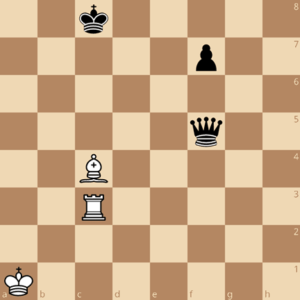
Seems like Black can win this game at the first glance. But look closely.
It is White to move. The attack can begin with bishop to d3 check. This move does two things.
- Check the king
- Attack the queen
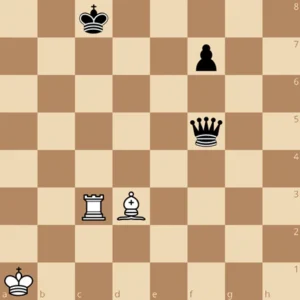
The rook was lined up straight with the Black king. Only the bishop was stood in the way of their staring contest.
The bishop moved, clearing the path for the rook to deliver a check – at the same time, the enemy queen came under attack as a result of that move. This is how a discovered attack works.
Example 2
Let’s look at a bit “messier” example now.
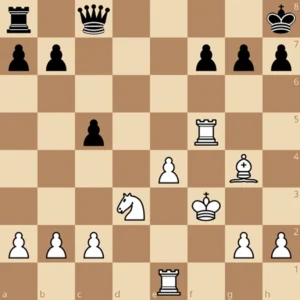
White is already ahead in material in this particular position. White has another opportunity to take the material lead further.
Notice that the rook on f5 can take the pawn on f7. It will reveal an attack on the enemy queen. Black must move the queen to safety, otherwise the queen will be captured.
In this way, you win a pawn and take the lead in the game once again.
Example 3
We’ll now look at the final example of simple discovered attacks. Your foundation is getting stronger. Let’s see how you can win material once again with the position below.
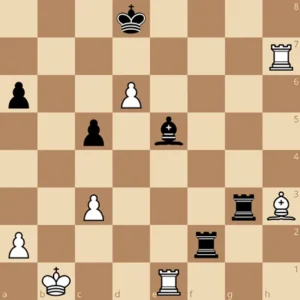
For the tactic we have been discussing to apply, you have to start with the rook check as White: Rd7+.
If king goes to e8, Black immediately loses the dark-squared bishop, with checkmate waiting in just a couple of moves. So, the king goes to d8 instead: Kd8.
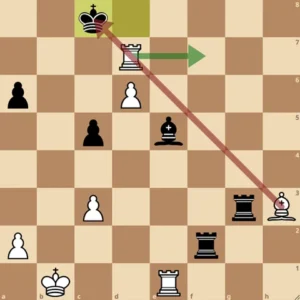
White is prepared to unleash a decisive attack on the Black king. The best move to continue is Rf7+. This way, you win a rook even with the best defense.
By the time you’re reading this, you already have a decent idea of what a discovered attack is and why it’s important.
There are also some related tactics associated with this one. You can say these are byproducts of the main idea. We will explore those in a moment.
Double Attack
A double attack refers to an attack on two enemy pieces by one or more of your own pieces. Both attacks occur in the same move. A double attack made by a single piece is also called a fork.
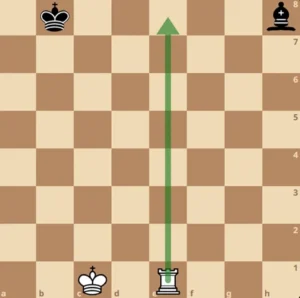
White’s rook checks on e8; Re8+. The move attacks both the king and the bishop simultaneously. Black loses the bishop on the next move.
This is a fork, folks – an essential tactic in the middlegame of a chess game. You can check out my other article to learn more about it.
Discovered Check
A discovered check is a similar concept to the basic discovered attack we learned earlier. The only difference is that this time, the uncovered attack delivers a check. You may have guessed already what that means.
We have already covered this concept in some of the earlier examples. I’ll now show you a position that is connected to another concept – a smothered mate.
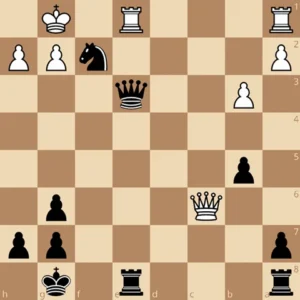
Take a look at the Black knight on f2. It has the White king on its front diagonal, and the Black queen on the diagonal behind. Moving the knight to h3, checking the king, it creates a discovered check.
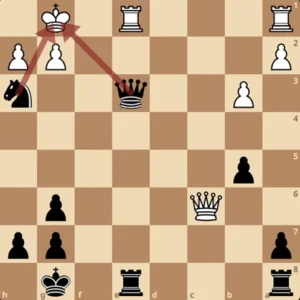
The knight’s move gives a check to the Black king from both the queen and the knight itself. You have just applied three key tactics – discovered attack, discovered check, and double attack – in one move.
Black is going to win in just a couple of moves if played correctly. By checkmating the king, you will have applied another concept called the Smothered Mate.
Pillsbury’s Mate
Pillsbury’s Mate is – in a sense – a combination of the concepts we discussed above. You can checkmate the enemy king using your rook with help of a bishop.
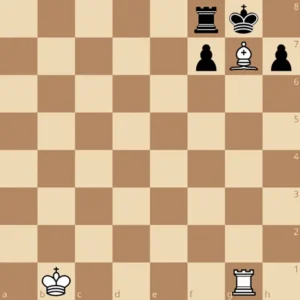
The position above is a mate in one. Moving the bishop anywhere along the diagonal from a1 to h8, delivers checkmate.
However, if you move the bishop to h6, it will also lead to checkmate. In this case, an extra move will be required to achieve it.
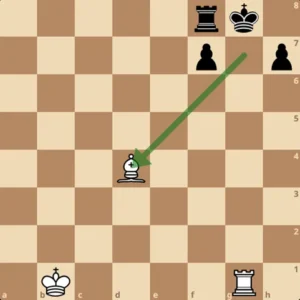
You move the bishop – deliver a discovered check – and end the game. This checkmate pattern is called Pillsbury’s Mate.
Takeaways
Suppose you want to reach a specific branch of a tall tree. Can you jump directly to it?
Unless you are Spider-Man, you can’t do that.
You have to start by climbing the trunk of the tree first. Once there, you can move to any branch or stem you like, because all the branches are tied to the trunk.
The same goes for today’s tactic.
It may seem “too much” at first. But you only need to learn one concept – the discovered attack – the trunk.
All the other ideas around it are the different branches. Once you climb the trunk; you will be able to ”discover” the others on your own.
It may seem a little overwhelming if you are reading the whole article for the first time. You will find it much easier on a second read.
Conclusion
Whenever you have two pieces lined up, check for possible discovered attacks. Look for open files or diagonals that can potentially help you gain a lead in the game.
To truly master concepts like these, or any other tactics, you must practice consistently. Solve puzzles and train yourself to become a better player.