Hello there!
I guess you’ve been trying hard to win your first FIDE-rated match – or at least you’re planning to play in a tournament in the near future. I assume that’s why you’re here in the first place.
Let me tell you my story first.
I played my first FIDE tournament five months after I was introduced to the fact that chess has an international community as well. I was just getting started with my knowledge of openings, endings, middlegame tactics, and more.
I couldn’t beat any rated player in that tournament. What did you expect?
But I did take some lessons from that first tournament and had a rough idea of why was I losing games.
How I Beat My First Rated Opponent
A few months later, I participated in my second FIDE tournament – both the tournaments were a rapid chess event with a time control of 10 + 5 – 10 minutes on the clock with a 5-second increment after each move.
I was playing an around-1650-rated player in my second game. I was focused in that game as hell. He blundered some pawns in the middlegame – which gave me a substantial advantage.
I traded all the pieces and we ended up on a bishop-and-pawn endgame – where I was three pawns ahead.
I wish I could have measured my heartbeat during the whole game – especially in the endgame. It was a dark-squared bishop and pawns fight at the end.
I had three connected pawns almost ready to promote with the help of my bishop – which was controlling one of the promotion squares.
My opponent resigned at that moment and I was literally looking around. Maybe I was saying something like, “Hey world! Did you see that? I just beat a 1650-rated player!”.
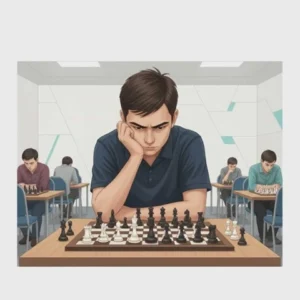
It was my first win against a rated player. I immediately called my younger brother with this news, as he was a chess enthusiast too.
Later, in my third tournament, I managed to beat an FM as well – in rapid chess.
I am going to share today the insights from my personal experience – the things that helped me win those games against those rated players. I am quite confident that you will find them useful as well.
Without further ado, let’s begin!
1. Play the Basics, Don’t Try Anything Fancy
You are trying to win your first chess match against a rated player. You have to be careful with every single move you make. Even a subtle mistake can cost you the win. Trust me, rated players are strong.
You have to stick to the basic chess principles as you progress through the match. The opening principles, middlegame strategies, and some basic endgame rules are enough to shine.
However, you must learn some theoretical endgames first.
Some players try fancy moves right in the opening. In online chess, it may be fine experimenting. But if you want to win over the board (OTB), there are no alternatives to the basic chess principles.
By basic chess principles I mean the following for the opening:
- Control the center
- Develop your minor pieces first, then major pieces. And develop them effectively, as GM Avetik says.
- Castle at the right time.
- Ensure the safety of your king
- Do not move a piece twice in the opening
- And do not bring your queen too early in the game
You see, the opening in such matches is the most important phase. Even a small advantage in the opening can help you unexpectedly in the middlegame, and eventually in the endgame.
Then comes the phase middlegame phase. This is a challenging part of the game. Most players mess things up here. They blunder pieces in panic and due to a lack of carefulness.
A good middlegame demands several things from you:
- Maintain a good pawn structure
- Trade your inactive pieces for the opponent’s active and strong pieces
- Break the opponent’s pawn structure
- Expose the opponent’s king
- Look for hidden tactics
Maintaining these principles will ensure a better middlegame, and a strong endgame.
Pro tip: If you are ahead in material, trade as many pieces as possible to gain an advantage in the endgame.
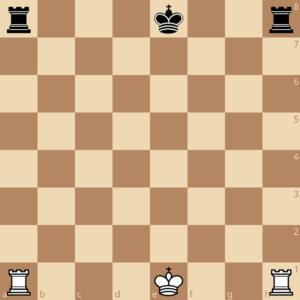
You should have prior knowledge of some theoretical endgame scenarios. Such as checkmate with a rook, checkmate with a queen, checkmate with two bishops, a pawn-and-king endgame, and so on.
Theoretical endgame knowledge will save you time on the board. However, there are things to be careful about in the endgame as well.
Opposition, pawn promotion, passed pawns, using the king effectively, and blocking passed pawns. These are the most basic things to pay attention to in the endgame.
The bottom line is – if you stick to basics, you increase the chance of winning.
2. Take Your Time
It is quite common for beginners to start playing in rapid tournaments. Rapid tournaments are also arranged more frequently than those with other time controls.
I recommend beginners to start playing in FIDE tournaments with rapid time controls. It’s more beginner-friendly. You can actually think before making a move – and not just memorizing moves or playing randomly.
Assuming that rapid chess is the first format for beginners in FIDE tournaments, it is essential to highlight the importance of using your time effectively.
I remember when I beat an FM, I had only four minutes left on my clock when he resigned., and he had around had eight minutes – almost twice my time.
I was pausing before making each move asking myself, “Is there any opportunity on the board?” until I saw that he had blundered his queen.
In these tournaments, there is a high chance that you will face an opening that is unfamiliar to you. The first thing you have to do is not to panic – and then stick to the opening principles we discussed earlier.
Make each of your move with extra care. Think before every move. Ask yourself while making a move –
- What is this move going to do? Improve my position? Attack? Defense? Or something else?
- What is the best move for your opponent in response?
Take time to ask yourself these question on every move. It will consume time. But trust me, it definitely will pay off. Don’t rush.
3. Do Not Look Away from the Board
Let’s be honest. Rapid matches are long, and it’s challenging to keep your focus throughout. Considering the distractions we deal with every day – it can be difficult to keep your focus on the board for 20 minutes – or even longer.
You will often be tempted to look around the venue during your game. Or maybe get bored if your opponent takes a long time to respond.
You made your last move with a plan in mind. Maybe you have also calculated what is going to take place on the board.
Once you look away from the board, looking around yourself what the others are doing, you lose the deep concentration.
As soon as the opponent responds, you look back at the board – and a get a little lost about what was going on. Sometimes you might even forget the perfect plan you created just a minute ago, and that is frustrating.
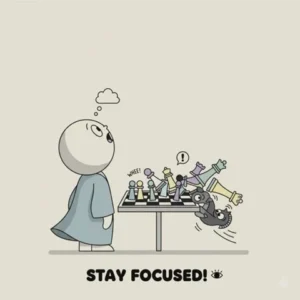
Suppose you are driving a car at a decent speed to reach an anticipated event in time. You don’t want to miss the beginning of it, but you have to stop by the gas station.
That means you have to accelerate once again from zero and regain your previous speed.
You face a similar situation on the chessboard in a rapid game. Looking away from the board is like stopping at a gas station. It is possible that you might forget the “why” of your last move.
When the FM blundered his queen against me, I was calculating something else entirely. I was thinking of improving my position – until I spotted the free queen.
Although I got confused at first thinking it must have been a brilliant move. After all, he is a Fide Master! It turned out to be a blunder.
It is difficult to maintain your focus on the board for that long. But try not to look away in critical moments. Otherwise, it will waste time rethinking.
4. Keep Your Mind Calm
Keeping a calm mind is important not only in chess, but in every situation in life.
A calm mind gives you a better chance to make the best moves on the board. It also gives you the opportunity to take a pause and think before moving a piece.
A calm mind means a hormonal balance in the body. It refers to low level of cortisol and adrenaline. Balanced cortisol and adrenaline levels can make you more alert and may help you make the right decision at the right time.
On the other hand, it becomes real opposite if you panic or in a stress in critical moments of a game. Stress elevates the level of cortisol and adrenaline – which negatively affects your strategic thinking and decision-making.
Drink a sip of water, get enough sleep. You can also consider taking a stroll in nature between games to refresh yourself for the next round. Rapid tournaments last almost the whole day. Your focus will not be the same as the beginning of a tournament.
This is not a physiology class. The takeaway is to stay calm in any position – even before the game starts.
5. You Have Nothing to Lose
You are on a mission to beat your first FIDE-rated opponent. There is absolutely nothing to lose if you lose the match.
You don’t have a rating or reputation that could be lost if you don’t do well in a game. Instead, you will gain a bunch of lessons. You will get to know your game better than ever before.
I played against an 1880-rated player in the first game of my second FIDE-rated tournament.
Apparently, I lost that game. But my opponent praised my playing style – and it meant the world for me back then. He recommended me to learn more tactics and read books on chess.
You will notice that I didn’t lose my image but gained recognition to that player. I was able to identify my weaknesses and areas to improve through a short conversation with him. That motivated me for the rest of the tournament.
Additionally, you will not be under pressure while facing a rated player. Even a draw would prove your ability. If someone has to be under pressure, it should be your opposing rated player.
Keep your mind pressure-free – and as they say, “Hope for the best, prepare for the worst”. This will help you achieve what you want.
Summary
Winning against a rated player for the first time as a non-rated player is not that hard. Beginners often make it seem harder in their minds. I myself am an example of that.
You just have to follow a few simple steps to experience the joy as I did – or any beginner would. Just remember a few things.
Play basic chess. Do not try anything fancy – especially in the openings. A small mistake can potentially ruin your chance to win.
Don’t rush when making a move. Think before each move, even if you know what will happen next. Take a pause.
Try to concentrate on the board for as long as possible. Looking away from the board breaks your focus. You can miss opportunities. Keep your eyes blocked on the board during crucial moments.
Don’t get stressed. A calm mind rewards you with a good game.
Expect nothing. A draw – or surviving for a substantial number of moves can be your achievement. You have nothing to lose.
I wish you all the best of luck for your next tournament.