Did you ever break a bone? I reckon you have – or at least you have seen someone else go through that painful moment. No?
Not a problem! Don’t worry. I’m not here to ask you to break your Ulna or Radius.
But you probably know what happens when you see a doctor with your swollen arm from the soccer field. The very first thing the doctor would ask for is an X-Ray report.
X-Ray reports help doctors see the bone condition through the human skin.
What Does an X-Ray Have to Do with Chess?
In chess, there is a concept called X-Ray as well. It’s the X-Ray Tactic.
Just like the medical x-ray, this tactic reveals the power of a piece behind another – which was human skin in the medical x-rays.
In simple terms, x-ray tactic is the process to defend your piece through the enemy piece. Let me give you a simple example before proceeding further. It will give you more clarity.
Look at the position below. It’s Black to move.
It might seem that White is winning at the first glance.
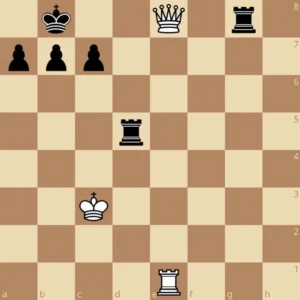
However, Black has a nice move to defend their rook on g8.
But let me ask you first. What would you have played in this position as Black? Would you capture the White queen or resign?
Don’t resign!
Play 1…Rd8 instead!
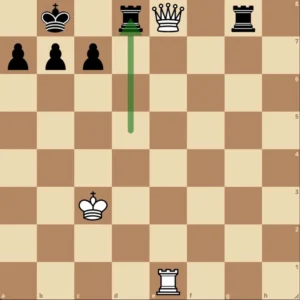
This move blocks the attack on the king.
How does the x-ray tactic work here?
Well, the g8 rook was under attack earlier with the check. There is no way to capture the checking piece – the White queen.
1…Rd8 move does two works –
- Defends the g8 rook
- Blocks the check
The rook on d8 is now simultaneously defending the position and attacking the White piece.
You just got familiar with the x-ray tactic in chess.
To make it even simpler, just remember that there will be an attacking enemy piece in between two of your pieces. That’s X-Ray. And do remember that x-ray works with long-range pieces like the bishops, the rooks, queen + bishop, queen + rook.
You get the idea.
What you have just learned is a defense through the x-ray tactic. It can be used in attacks as well. Let’s expand your idea on that too.
X-Ray Attacks
The x-ray in chess can be used in two ways – defense and offense or attacks.
You’re already familiar with the defense concept if you have come this far. And if you skipped the previous parts – well, you’re missing out.
An x-ray attack – as the name suggests – is used to attack enemy pieces. It’s as simple as that.
You’ll be able to visualize in your game if you learn it with an example. There’s no better way, huh?
X-Ray Attacks Example 1
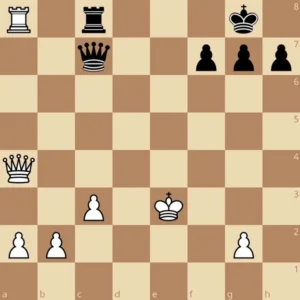
Pay close attention to the position above. It is White to move.
A complete beginner – or is not familiar with the tactic we’re discussing – might want to capture the Black rook on c8 and simplify the position.
Well, the idea isn’t wrong. Basic chess lessons teach you to trade as many pieces as you can when you’re ahead in pawns.
But there’s a better move if YOU are that “anyone”.
It’s Qe8+!
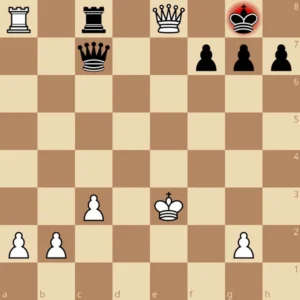
It looks like a brilliant queen sacrifice. And yes, IT IS!
This move attacks the enemy king. In fact, it’s checkmate on the very next move.
The continuation from here is 1… Rxe8+ 2.Rxe8# and White wins the game.
You might have noticed that you are not protecting any of your pieces with the move Qc8+. In fact, you are attacking the Black king.
As you have learned earlier – there would be one enemy piece in between your two pieces in an x-ray.
That is what exactly happens here.
X-Ray Attacks Example 2
Let’s move on to the next “attacking” example. Take a look at the position below.
It’s White to move.
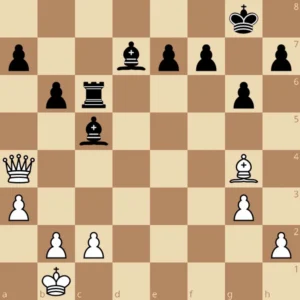
It’s one of the most basic entry-level examples. If you’ve been reading carefully, you may have found the move already.
White plays Bxd7.
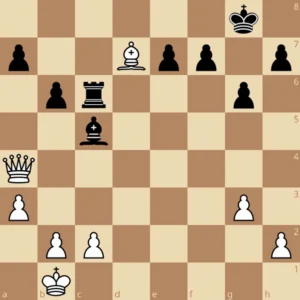
In this position, White’s queen and bishop are defending each other through the Black rook in between – even though neither of the pieces are under attack.
So, what is this tactic called again?
I won’t tell you. You figure it out.
X-Ray Defense
You have seen one example of defense through x-ray at the beginning of this article. Just to make the concept clearer – we’re going to go through another example of defense.
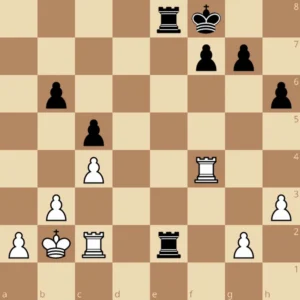
White to move in this position.
Black has a battery on the e file. The rook on e7 is trying to essentially win a pawn – hoping White would take the e7 rook.
But we are smart, aren’t we? Of course we are! We know the x-ray!
We will play Rf2.
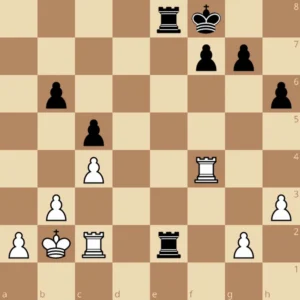
This move makes our opponent hopeless on the pawn-winning thing.
Fun’s apart. White defends the other rook as well as the pawn on that rank. They defended their position through this tactic.
I hope you now have the basic idea of how the x-ray tactic in chess works.
X-Ray vs Skewer
Beginners often confuse X-Rays with Skewers. This confusion would make more sense if you take a closer look at both concepts.
Both tactics involve a lineup of pieces and with long-range pieces.
In case if you don’t recall what a skewer is, here’s a quick reminder for you.
A skewer occurs when you attack a more valuable piece in front of a less valuable piece on the same file / rank / diagonal.
Essentially the less valuable piece left hanging or gets captured most of the times.
A skewer is like a pin – but the other way around.
Makes sense?
Key Difference
In skewer, the front piece – aka the more valuable piece – is forced to move. You don’t want to sacrifice your queen for a bishop, do you?
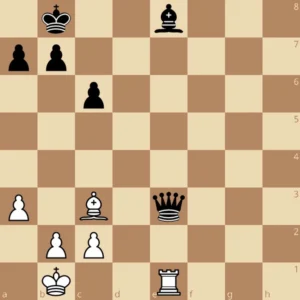
Look at that White rook staring at the Black queen. It’s like, “stay out of my way!”
Opponent must move their queen in order to continue the game. Otherwise, the game would be virtually over. This is a skewer.
On the other hand, you don’t force the front piece in an X-Ray tactic. Front piece stays. The pressure works through it.
Let’s see a modified version of the example above for an X-Ray.
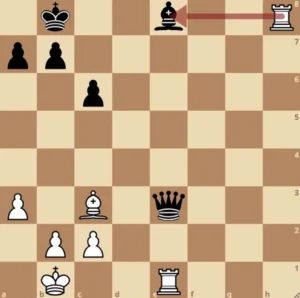
Just added a rook at the back rank. Now it’s an X-Ray.
You are not attacking the queen, but creating a pressure through it. This is how an-X-Ray tactic in chess works.
The Takeaways
So then, what should you actually take away from this?
The X-Ray tactic doesn’t lead you to immediate wins – and it’s not about some cool sacrifice either.
Instead, you attack a piece indirectly by applying pressure through another piece. That’s the idea of this tactic.
Now you are aware of –
- Defending your pieces
- Attacking through an X-Ray
- The difference between a skewer and an x-ray
The next time you play a game, don’t just look for direct attacks. Try to look a step deeper.
Remember: A failed skewer often turns into an X-ray – but not every X-ray is a skewer.